
Types of Genetic Testing: A Complete Guide for Health and Wellness
Genetic testing plays a major role in modern healthcare because it reveals important information about your health, disease risks, and inherited traits. People now use genetic tests not only for medical reasons but also for personal wellness and future planning. Understanding the different types of gene testing helps you choose the right test for your needs. Specifically, this guide explains each type, how it works, who needs it, and what benefits it offers.
What Is Genetic Testing?
Genetic testing checks your DNA to identify variations, mutations, and inherited patterns that may influence your health. Each test focuses on specific genes, traits, or medical conditions. Because every person’s DNA is unique, these tests help create a personalized roadmap for disease prevention, treatment choices, and overall wellness planning.
1. Diagnostic Genetic Testing
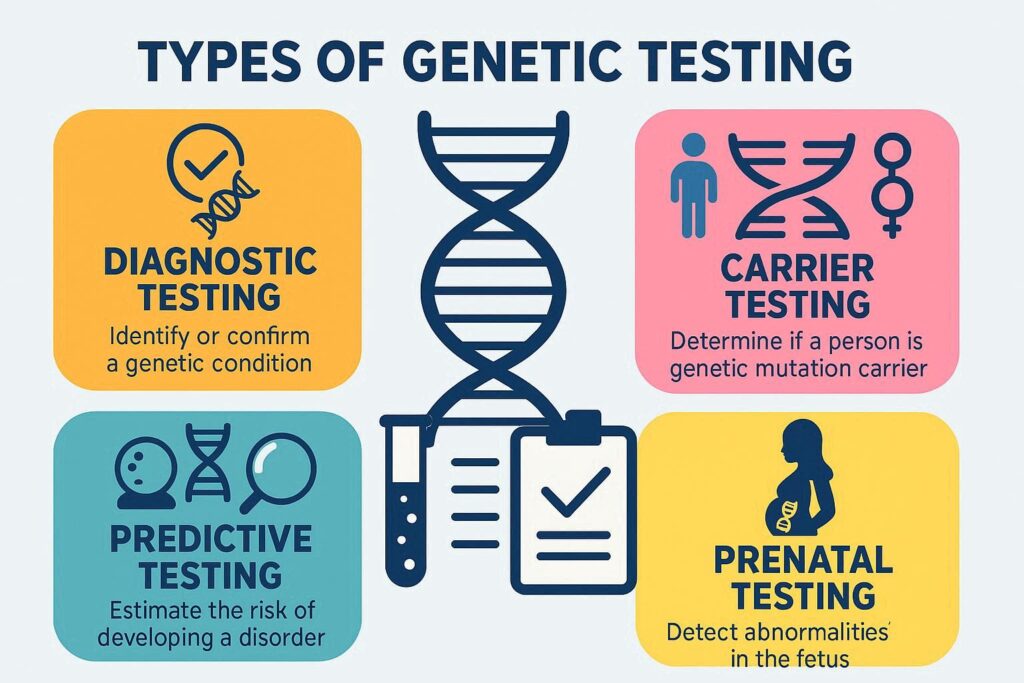
Diagnostic genetic testing confirms or rules out a suspected genetic condition. Doctors use this test when a patient shows symptoms that indicate a possible inherited disorder. Diagnostic tests help identify conditions like cystic fibrosis, muscular dystrophy, and certain genetic syndromes.
This type of test matters because it gives clear answers. With a confirmed diagnosis, doctors create accurate treatment plans and long-term care strategies. Early identification also improves health outcomes and reduces complications.
2. Predictive Genetic Testing
Predictive genetic testing estimates your likelihood of developing a condition in the future. People use this test when they want to understand their risk for diseases like breast cancer, colon cancer, or heart disease.
Because this test offers early insights, it empowers you to take preventive actions. You can adjust your lifestyle, schedule regular screenings, and work closely with healthcare providers to manage risks before symptoms appear.
3. Carrier Genetic Testing
Carrier testing checks whether you carry a gene mutation that you could pass to your children. Even when you show no symptoms, you may still carry a recessive gene linked to conditions such as sickle cell disease, Tay-Sachs disease, or spinal muscular atrophy.
Couples often choose carrier testing before pregnancy because it supports informed family planning. When both partners carry the same mutation, they understand the possible outcomes and discuss options with a genetic counselor.
4. Prenatal Genetic Testing
Prenatal genetic testing, in essence, examines genetic conditions in a developing baby. Additionally, it helps detect chromosomal abnormalities such as Down syndrome, Edwards syndrome, and neural tube defects. Specifically, the two main methods are:
- Non-invasive prenatal testing (NIPT) – analyzes fetal DNA found in the mother’s bloodstream
- Invasive tests – such as amniocentesis or chorionic villus sampling (CVS)
Parents choose prenatal testing to prepare early, improve medical planning, and make confident decisions throughout pregnancy.
5. Newborn Screening
Newborn screening takes place shortly after birth. Hospitals use it to detect serious but treatable conditions early, such as metabolic disorders, hormone deficiencies, and blood disorders.
Because newborn screening catches issues at birth, it helps prevent long-term complications. Early treatment greatly improves a child’s health and development.
6. Pharmacogenomic Testing
Pharmacogenomic testing studies how your genes affect your response to medications. Your DNA influences how your body breaks down drugs, which medications you tolerate, and which treatments work best for you.
Doctors use this test to select the safest and most effective medicines for conditions such as depression, heart disease, and chronic pain. This approach avoids harmful side effects and improves treatment success.
7. Ancestry and Trait Testing
Although not typically used for medical diagnosis, ancestry and trait testing help people understand their genetic background. These tests reveal ethnic origins, inherited traits, and personal characteristics influenced by DNA.
Many people use ancestry tests for personal interest or to explore family history. Some tests also include basic wellness insights, such as genetic tendencies related to nutrition or fitness.
8. Whole Genome and Whole Exome Sequencing
Whole genome sequencing (WGS) and whole exome sequencing (WES) analyze DNA on a much larger scale.
- WGS examines your entire genetic code
- WES focuses on protein-coding regions of the genome
These tests provide detailed information and help diagnose rare or complex genetic conditions. Doctors use them when other tests fail to provide answers.
How to Choose the Right Type of Genetic Test
Choosing the correct genetic test depends on your goals, health history, and current concerns. A genetic counselor offers important guidance because they understand the strengths and limits of each test. Always select a certified laboratory and discuss your results with a trained medical professional.
Before choosing a test, consider the following:
- Do you want medical answers or personal insights?
- Are you planning a pregnancy?
- Do you have a family history of specific diseases?
- Do you want treatment guidance or wellness information?
- Are you seeking broad DNA analysis or a specific health answer?
These questions help narrow your options and ensure you receive meaningful results.
Benefits of Understanding the Types of Genetic Testing
Learning about different types of genetic testing improves your ability to manage your health. You gain access to personalized medical plans, preventive screenings, better medication choices, and early diagnosis of potential conditions. You also make informed decisions about family planning and overall wellness.
Conclusion
Genetic testing plays an essential role in modern medicine and personal health. With many types of genetic testing available, you can explore deep insights into your DNA and uncover information that supports long-term wellness. By choosing the right test, working with professionals, and understanding your results clearly, you create a strong foundation for a healthier future.
FAQs About the Types of Genetic Testing
1. What are the main types of genetic testing?
The main types of genetic testing include diagnostic testing, predictive and presymptomatic testing, carrier testing, prenatal testing, newborn screening, pharmacogenomic testing, and whole genome or exome sequencing. Each type serves a different purpose based on your health needs.
2. What is the difference between diagnostic and predictive genetic testing?
Diagnostic testing confirms a suspected genetic condition when symptoms appear, while predictive genetic testing estimates your risk of developing a disease before symptoms start.
3. Who should consider carrier testing?
Carrier testing is ideal for couples planning pregnancy or individuals with a family history of inherited conditions. It helps identify whether they carry gene mutations that may affect their future children.
4. Is prenatal genetic testing safe?
Yes, most prenatal genetic tests are safe. Non-invasive tests such as NIPT use a blood sample from the mother. Other methods, like amniocentesis and CVS, involve minor risks but offer highly accurate information.
5. What conditions can newborn screening detect?
Newborn screening can detect serious genetic and metabolic disorders such as PKU, cystic fibrosis, sickle cell disease, and congenital hypothyroidism. Early detection allows immediate treatment.
6. What is pharmacogenomic testing used for?
Pharmacogenomic testing helps doctors understand how your genes affect your response to medications. It supports personalized prescriptions and reduces the risk of side effects.
7. Are whole genome and whole exome sequencing the same?
No. Whole genome sequencing reads your entire DNA, while whole exome sequencing focuses only on the protein-coding regions where most disease-causing mutations occur.
8. How accurate are genetic tests?
Clinical genetic tests are highly accurate when performed by certified laboratories. However, accuracy varies by test type and the genes being analyzed. Genetic counselors help interpret results correctly.
9. Do genetic tests require a doctor’s referral?
Some genetic tests, especially clinical-grade ones, require a doctor’s referral. At-home DNA kits do not, but they offer limited medical accuracy compared to professional tests.
10. Can genetic testing predict all diseases?
No, genetic testing cannot predict every disease. It identifies risks for conditions with known genetic components, but lifestyle and environment still play major roles in your health.
11. Will my genetic data remain private?
Most certified labs follow strict privacy rules, but policies vary. Always review the company’s data protection guidelines before taking any genetic test.
12. How much do genetic tests usually cost?
Costs vary widely. Basic at-home DNA kits may cost $50–$200, while clinical genetic tests or whole genome sequencing can range from $300 to several thousand dollars.
13. Can genetic testing guide lifestyle or diet choices?
Yes. Some tests offer insights about how your body processes nutrients, handles stress, or responds to exercise. These results help personalize your wellness and lifestyle plans.
14. Is genetic counseling necessary after testing?
Genetic counseling is highly recommended. Counselors help explain results, discuss risks, and guide you through the next steps for either medical management or family planning.