
Mindfulness Activities for Teens: Your Path to Inner Calm
If you want to feel less stressed, try practicing mindfulness. Our handbook offers simple mindfulness activities made for teens. Activities like mindful breathing and body scans can help you feel calmer and less anxious each day. Give them a try and start feeling more at peace.
These days, busy schedules, high expectations, and digital distractions can make life feel overwhelming. Many people feel stressed, which can affect both their body and mind. Taking a break now and then helps us relax and feel more in control.
This is precisely where mindfulness activities for teens emerge as a powerful, accessible solution. Through intentional practice, you can fundamentally shift your relationship with stress, moving from reactivity to thoughtful response. This comprehensive guide will explore the profound benefits of mindfulness and equip you with practical, actionable techniques to cultivate inner calm, one moment at a time.
II. Understanding Mindfulness: More Than Just Meditation
Before diving into the techniques, clearly defining mindfulness proves essential. At its core, mindfulness embodies the practice of paying attention to the present moment, on purpose, and non-judgmentally. It means fully engaging with your current experience—your thoughts, feelings, bodily sensations, and the world around you—without getting caught up in analysis or criticism.
Furthermore, differentiating mindfulness from meditation helps clarify its scope. Meditation often serves as the formal practice of mindfulness, a dedicated time you set aside to cultivate this awareness. Mindfulness, however, extends beyond the cushion; it represents a state of being you integrate into your entire day, transforming ordinary moments into opportunities for conscious engagement.
The scientific community increasingly recognizes the profound impact of mindfulness. Studies utilizing fMRI scans demonstrate that regular mindfulness practice actually alters brain structure. For example, it helps to reduce the size and activity of the amygdala, the brain’s fear center, while simultaneously strengthening connections to the prefrontal cortex, which governs decision-making, planning, and emotional regulation. Consequently, you gain a greater capacity to observe stressful thoughts and feelings without automatically spiraling into anxiety or panic. Ultimately, you develop a stronger, more resilient mind, directly addressing stress at its neurological root.
III. Core Principles of Effective Mindfulness activities for teens
Engaging with mindfulness techniques for stress relief becomes far more effective when you understand the foundational principles guiding them. These principles do not represent rules, but rather attitudes you bring to your practice, ultimately enhancing its depth and impact.
A. Beginner’s Mind:
Approach each moment, each breath, each sensation as if experiencing it for the very first time. Often, our preconceived notions and past experiences color our present perception. Conversely, a beginner’s mind allows you to shed these expectations and simply observe, fostering fresh insights and preventing old patterns of stress from taking hold.
B. Acceptance:
This principle means acknowledging your present reality, including any uncomfortable thoughts, emotions, or physical sensations, without resistance. Acceptance does not imply resignation or approval; rather, it involves recognizing what is without fighting it. Significantly, resisting difficult experiences often intensifies them, whereas acceptance allows them to move through you more freely.
C. Non-Judging:
Observe your thoughts, feelings, and sensations as they arise, but refrain from labeling them as “good” or “bad,” “right” or “wrong.” Notice them impartially, like a scientist observing data. This non-judgmental stance helps to dismantle the critical inner voice that often exacerbates stress and self-doubt.
D. Present Moment Awareness:
Anchor yourself firmly in the “now.” This core principle means redirecting your attention away from past regrets or future anxieties and bringing it gently back to what is happening in this exact moment. Indeed, most stress stems from dwelling on what has happened or worrying about what might happen, pulling you away from the only moment you truly possess.
E. Patience & Trust:
Recognize that cultivating mindfulness constitutes a journey, not a destination. But results do not manifest overnight; they unfold gradually through consistent practice. Trust the process, trust your capacity to learn, and approach your efforts with kindness. Impatience often breeds more stress, directly counteracting your mindful intentions.
IV. Practical Mindfulness activities for teens (Actionable Exercises)
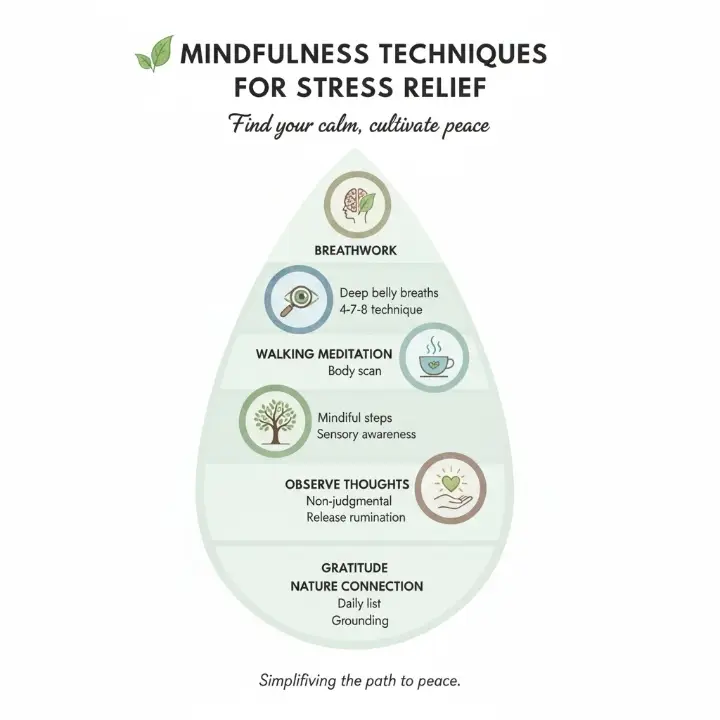
Now, let’s explore actionable mindfulness techniques for stress relief you can begin practicing today. These exercises offer tangible ways to bring present moment awareness into your life.
A. Mindful Breathing (Anchor Practice):
A significant component of most mindfulness practices is mindful breathing. It assists you in being in the present. To start with, it is necessary to settle down, and this can be in a sitting position or lying down. Close your eyes or lose your sight. Focus on your breathing. It is to squeeze your nose and feel the air coming in and out, and to squeeze your belly and chest and have them pushed and pulled.
It is only natural that you find yourself drifting. When it does, simply notice where your mind has wandered and do not critique yourself, but simply bring your body back to the breathing. Begin with 3-5 minutes of practice, and you can add more time as time goes on.
B. The Body Scan Meditation:
This method helps you pay attention to your body and find places where you’re tense. Sit up straight or lie down in a way that feels good. First, pay attention to your toes. Observe feelings like warmth, coolness, tingling, or pressure, and spend a few breaths focusing on them. Slowly move your focus from your feet to your ankles, calves, knees, thighs, hips, abdomen, back, chest, arms, hands, shoulders, neck, face, and finally the top of your head.
Spend a few breaths on each part, paying attention to how each area feels as you focus on it. Take a deep breath and picture letting go of any tension as you breathe out. This exercise helps you feel more connected to your body.
C. Mindful Walking:
Stay aware of your surroundings as you walk. Notice how it feels to walk, whether inside or outside. Feel your feet touch the ground, from the heel landing to the arch rolling, and the toes pushing off. Then, notice how your arms, legs, and torso move. Gradually pay attention to the sights, sounds, smells, and the air on your skin. If your mind wanders or worries, gently bring it back to the feeling of walking.
D. Mindful Eating:
When you eat thoughtfully, you pay attention to what you’re eating, so you may detect habits that might irritate you or upset your stomach. First, look at the colors, smells, and textures of your food. Take a little bite and pay attention to how it tastes and feels. Take your time chewing and pay attention to how the taste changes. While you eat, stay focused on what you’re doing and take a break before your next bite. If you eat more slowly, you can enjoy your food more, and your body will have time to notify you when you’re full. This can help you not eat too much when you’re worried or not paying attention.
E. Sensory Awareness (Sound/Sight Focus):
This quick method is great during times of high stress. Just pick one sense, like hearing. Close your eyes for a moment or soften your focus and listen carefully to everything around you. Recognize each sound without putting a label on it or evaluating it. Then, after a minute or two, change your focus to sight. Look at one thing with your eyes open, paying attention to its colors, details, and shadows as if you were experiencing it for the first time. In the end, this technique brings you back to the present and takes your mind off the stressful stories you tell yourself.
F. STOP Practice (Stop, Take a Breath, Observe, Proceed):
The STOP practice offers a concise, on-the-go mindfulness activities for teens when you encounter unexpected tension.
- S – Stop: Whatever you are doing, just stop.
- T – Take a Breath: Take one to three deep, conscious breaths. Feel your body.
- O – Observe: Notice what is happening within you (thoughts, emotions, sensations) and around you. Acknowledge it without judgment.
- P – Proceed: Continue with what you were doing, but with a renewed sense of awareness and intention.
V. Integrating Mindfulness activities for teens into Daily Life
Transforming mindfulness from a formal practice into an integral part of your life requires consistent effort and smart integration. You do not need hours; even short, intentional moments create a significant impact.
A. Start Small and Be Consistent:
Avoid the temptation to embark on hour-long meditations immediately. Instead, begin with 3-5 minutes of mindful breathing or a short body scan. Consequently, consistent daily practice, even in short bursts, proves far more effective than sporadic long sessions. Your brain actually builds new pathways with regular engagement.
B. Create Mindful Moments:
Infuse mindfulness into routine tasks. For instance, washing dishes, brushing your teeth, or drinking your morning coffee all offer opportunities. Feel the water, notice the texture of the mug, or taste the flavors. Furthermore, this converts mundane activities into anchors for present moment awareness, enriching your daily experience.
C. Use Triggers as Reminders:
Designate specific daily events as mindfulness triggers. For example, every time you stop at a red light, take three deep breaths. When your phone rings, pause before answering. These small, consistent reminders gradually embed mindfulness into your automatic responses, particularly useful when practicing mindfulness activities for teens during busy periods.
D. Journaling Your Mindfulness Journey:
After a short mindfulness practice, or at the end of the day, spend a few minutes journaling. Then write about what you noticed, any insights gained, or challenges encountered. Ultimately, this reflection deepens your understanding of your own patterns and reinforces the lessons learned through practice.
E. Finding a Community or Guided Practice:
Many people find guided meditations helpful, particularly when starting. Apps like Calm, Headspace, or Insight Timer offer vast libraries of guided practices. Additionally, joining local mindfulness classes or online communities can provide support, structure, and a shared experience, bolstering your commitment to daily practice.
VI. Benefits Beyond Stress Relief: A Holistic Transformation
While mindfulness activities for teens form a primary goal, their benefits extend far beyond simply reducing anxiety. Engaging in regular practice actually initiates a holistic transformation, Therefore, it is impacting various aspects of your life.
- Improved Emotional Regulation: You develop a greater capacity to observe emotions without being overwhelmed by them, fostering more thoughtful responses rather than reactive ones.
- Enhanced Focus and Concentration: By consistently bringing your attention back to the present, you strengthen your ability to focus, boosting productivity and mental clarity.
- Better Sleep Quality: Quieting the racing mind before bed often leads to falling asleep faster and experiencing deeper, more restorative sleep.
- Increased Self-Awareness and Compassion: You gain a deeper understanding of your own thoughts and patterns, fostering greater self-acceptance and kindness towards yourself.
- Stronger Relationships: Improved self-awareness and emotional regulation translate into more present and compassionate interactions with others, ultimately strengthening your connections.
VII. Common Challenges and How to Overcome Them
Embarking on a mindfulness journey often brings its own set of challenges. However, understanding these common hurdles helps you navigate them effectively.
- “My mind won’t stop racing.” This is the most common experience! But remember, the goal is not to stop thinking, but to notice thoughts without getting swept away. Simply acknowledge them as “just thoughts,” then gently bring your attention back to your anchor (e.g., your breath). This builds mental muscle.
- “I don’t have enough time.” You don’t need extensive periods. As previously mentioned, even 1-3 minutes of focused breathing can make a difference. Integrate micro-moments throughout your day.
- “I’m not doing it right.” Mindfulness involves practice, not perfection. There is no “right” or “wrong” way to be mindful; there is only “being present.” Release the pressure to perform and simply observe your experience.
- “It’s boring/uncomfortable.” Sometimes, confronting your inner landscape can feel dull or even uneasy. Acknowledge these feelings with curiosity, rather than resistance. Patience and consistent, gentle effort will lead to breakthroughs.
VIII. Conclusion: Your Journey to Sustained Calm with Mindfulness activities for teens
Starting with intentional practice is a key way to find lasting inner peace, even when life feels chaotic. Mindfulness can help you manage problems with more ease and strength by reducing stress. It also helps you break free from automatic reactions so you can enjoy life more fully and happily.
Try using these helpful techniques every day, instead of waiting until stress builds up. You can start with something simple, like taking a minute to focus on your breath and notice how it helps you feel better. A calmer, more present, and less stressed version of yourself is possible.
Disclaimer: This article provides general information about mindfulness techniques for stress relief and is not a substitute for professional medical or psychological advice. If you are experiencing severe stress, anxiety, or mental health concerns, please consult a qualified healthcare professional.
Pingback: Mental Health Tips for 2025