
How to Get Back on Track with Your Diet: A Practical Reset Guide
Find out how to get back on track when your diet goes awry with this doable and straightforward advice that will work for you. Need a reset? See how you can get back on track with your eating and establish new, healthy habits.
Stressful times and busy days can make it hard to stick to healthy eating. One slip-up can sometimes lead to more, which can feel discouraging. But having setbacks does not mean you have failed. Facing challenges is a regular part of any health journey.
Instead of focusing on failure, focus on building skills to handle challenges. This guide shares practical steps to help you get back to healthy eating. We offer clear strategies to help you start again with confidence. Let go of guilt and the need to be perfect—focus on making progress.
Ties with meal planning
Did a lack of healthy food options result in less nutritious choices?
In some cases, social situations may affect your eating habits. Likewise, did travel, holidays, or eating with friends make it hard to stick to your plan? To better understand your patterns, write down these triggers in a journal or a notes app. Keeping track can help you spot patterns you might not have noticed before. Above all, remember, reflecting is for learning and growing, not for blaming yourself. Once you understand the reasons behind your setbacks, then you can develop strategies to handle similar situations in the future.
Before moving forward, take some time to think about what led to lapses in your healthy eating. First and foremost, being honest with yourself is essential for getting back on track with your diet. Meanwhile, as you reflect, remember that the goal is to learn and make a better plan, not to blame yourself.
Furthermore, understanding what caused your setbacks can help you avoid them in the future. To help with this, ask yourself these questions:
For example, did stress contribute to your setback? Additionally, did challenges at work or in your personal life lead you to eat for comfort?
Reflect Without Judgment to track with your diet
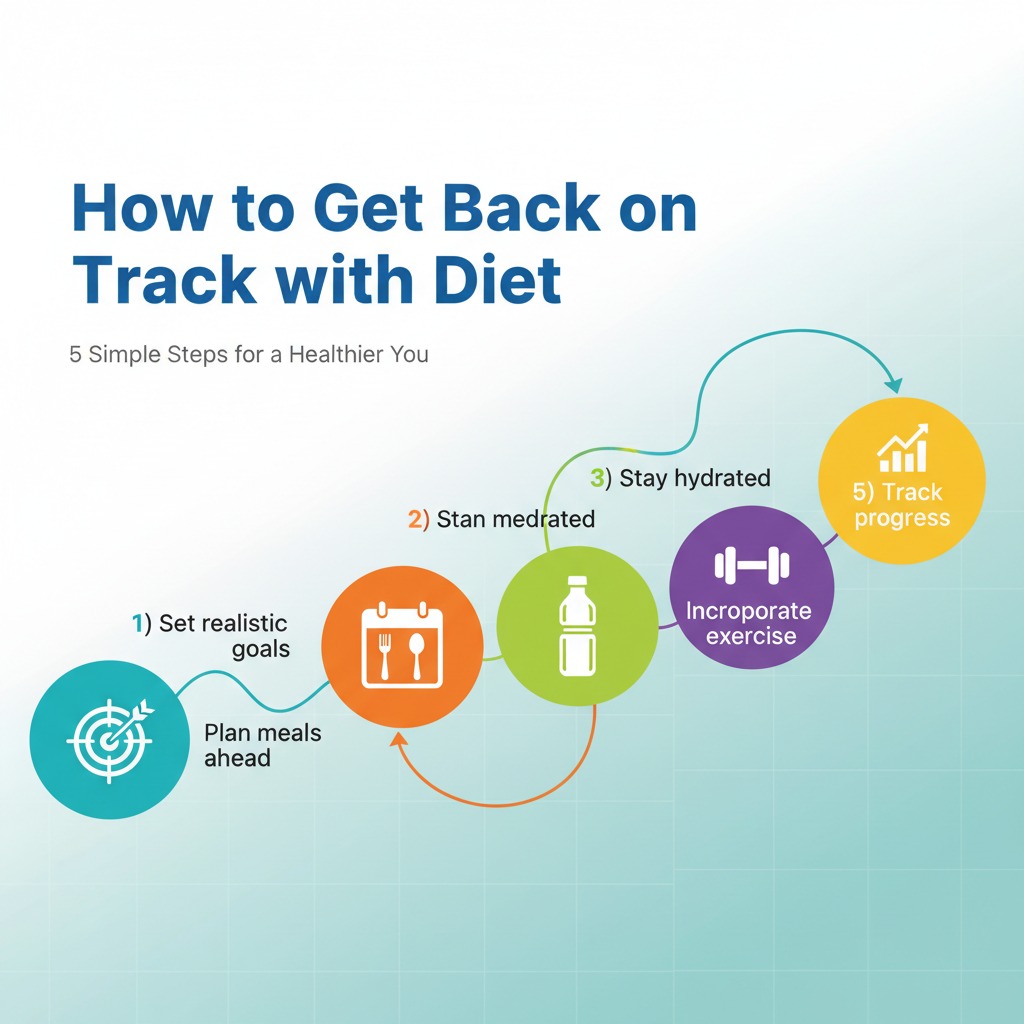
To put your plan into action, it may be helpful to understand what derailed you. In fact, taking an honest look at yourself is the first step to getting back on track with your diet. Rather than pointing a finger at yourself, it’s more akin to gathering information to make a more intelligent plan.
Analysing the cause of the setback can help you avoid making the same mistake again. The following questions should be asked:
• Was there stress? Was work or a problem causing stress-driven eating?
• Lack of planning? Did you have no other healthy alternatives and reach for what was easiest?
• Could the reason be from social pressure? Has going out possibly put pressure on you so that you cannot stick to the plan?
Take out your journaling notebook or open your notes program and list your triggers. Looking through these can sometimes show you what you missed the last time you reflected on them. Always keep in mind that, in the process of reflecting, your goal is to learn and grow, not to point fingers.
Revisit Your Goals
Rather than concentrating on a larger accomplishment from a significant distance, you should focus on smaller actions that lead toward achieving that larger accomplishment, starting now. Instead of declaring “I want to lose 20 pounds” and expecting it to happen all at once in the future, set daily achievable goals, such as “I will drink eight glasses of water every day” or “I will put vegetables on my dinner plate.”
The best method for developing these new goals is SMART goal setting to track with your diet.
• Specific: Clearly define what you will achieve. For example, “I will walk 30 minutes each day.”
• Manageable: Define how you will manage and measure your progress towards your self-study program, e.g. “I can manage my own progress.”
• Achievable: Is the stated goal achievable with current resources or circumstances?
• Relevant: Is this goal aligned with your overall intention to return to a healthier diet?
Time-bound: Set a deadline. (e.g. by the end of this week.)
The goals are your way posts — shift them when you need to, but don’t change the destination. When you can clearly see what’s in store for you, the journey is far less daunting.
Start Small, Start Now to track with your diet
The idea of a total overhaul of the diet can be paralysing. The path back to healthy eating is lined with intention and baby steps, not one giant leap. Small wins generate the momentum and confidence necessary to keep working.
No need to wait until Monday or the first of the month. Start right now. Here are a few simple ideas:
EAT RIGHT: Eat Right for Your Next Month’s Meals. Don’t stress about the rest of the day or the week, for that matter. Concentrate instead on one healthful, balanced meal.
To start, swap one thing. For instance, substitute an unhealthy habit with a healthier one. For example, trade in your afternoon soda for sparkling water or your bag of chips for a small container of almonds.
To begin with, we’re trying to challenge an inertia cycle. Once you prove to yourself that you’re capable of making one good decision, the next one becomes easier. Most importantly, keep in mind that every little step is a stepping stone towards your goals.
Plan for Success to track with your diet
“Decision fatigue” is a reality. You’re more likely to select the simplest option—which isn’t always the healthiest—when you’re exhausted or under stress. When you want to successfully reset your diet, a little preparation is essential and your best line of defence against temptation.
The uncertainty is eliminated when you have a plan. Here’s how to position yourself for success:
• Make a weekly meal plan. A gourmet menu is not necessary. For the next few days, write down easy, well-balanced meal ideas. Grocery shopping becomes more efficient and focused as a result.
• To start, gather essential ingredients for meal prep. For example, you can grill some chicken breasts, roast a tray of vegetables, or make a batch of brown rice. As a result, having these on hand speeds up the process of putting together a quick, nutritious meal.
• Add transition words in this text
One famous adage is “failing to plan is planning to fail.” Plan and prepare for the weekend for an hour. You’ll be grateful to yourself for the entire week.
Regain Your Healthful Habits
The key to turning short-term actions into long-term success is consistency. It’s tempting to make all the changes at once after a setback, but this strategy often leads to burnout. Rebuilding your healthy habits one at a time is a more sustainable approach.
For a week or two, focus on one habit at a time until it becomes instinctive. You could begin by:
Drinking the same amount of water every day helps maintain the body’s hydration.
Adding an extra portion of vegetables to meals increases nutrient intake.
Mindful eating means focusing on feelings of hunger and fullness while reducing distractions from a disruptive food environment.
A checklist or an app tracking habits can help in following new routines. Crossing off completed activities may help build motivation. It is essential to be persistent when creating new routines.
Find Your Support System to track with your diet
Starting a health experience might be isolating, but it is a great comfort to know that others can be part of it, especially if a boost is needed to keep moving forward.
Your support system can take many forms. Consider the following:
• To stay accountable, share your goals with a trusted friend or family member. In fact, sometimes just telling someone what you’re trying to achieve can make you more likely to stick with it.
• Find a diet buddy. Pair up with someone who shares similar ambitions, for there are times when one’s own encouragement and motivation would suffice to see you through the worst phases. Help each other find tips and celebrate your wins through challenges.
• Alternatively, join an online support group. There are thousands of forums and social media groups focused on health and wellness where one can receive encouragement and advice.
• Consider professional guidance. If you need more structured support, working with a registered dietitian or a certified health coach can provide expert advice and personalised accountability.
Remember: leaning on your tribe isn’t a sign of weakness; it’s a smart strategy for success.
Practice Self-Compassion
The most crucial thing in all of this is learning how to be kind to yourself. Guilt and shame are not helpful emotions and can keep you trapped in a pattern of negativity. You have experienced a setback. So what? The solution is to forget about it and move on.
“Self-compassion is the key to lasting progress.” If you find that you’re speaking negatively to yourself in your mind, you need to make the effort to change that by speaking positively to yourself.
• Replace “I completely ruined my diet” with “I had a few off days, and now I’m ready to get back on a healthy track.”
• “I have no willpower” may be changed to “I am making progress each day, and I can meet my goals.”
Bask in the glory of your small victories, no matter how trivial they may appear. For instance, you picked water over soda. Or perhaps you went for a walk. Acknowledge this. After all, small victories will remind you of your dedication. Above all, remember you are a human being, not flawless—treat yourself with compassion.
Conclusion: Progress Over Perfection
“Getting back on track in your diet habits means making small, incremental changes. So-called setbacks along the way aren’t really failures; they’re chances to grow, adjust your path, and return even stronger.” Do away with the ‘nothing but the best’ attitude. Instead, celebrate the element of ‘progress.”
Start today. Instead of waiting for the “perfect time,” choose one thing from this guide and do it today. For example, make yourself a healthy snack, pour yourself a glass of water, or write down one thing you can do to improve your health. Remember, you can do this—one step, one meal, one day at a time.
Frequently Asked Questions
Q1. I had a pretty terrible week when it came to eating. Do I even bother trying to get back on track?
A1. Absolutely. One week of struggling will not undo all of the progress you have made. The trick to being successful is figuring out how to adjust your eating when this happens, rather than trying to prevent it altogether. Concentrate on taking one positive action today in an attempt to revive your eating habits.
Q2. How can I restart without being overwhelmed?
A2. The best thing to do is to start small. Don’t try to change everything in one go; begin with just one small act, such as making your next meal a healthy one or drinking a glass of water instead of reaching for soda. These small wins build momentum and make the process of getting back to healthy eating feel much more manageable.
Q3. What is the very first step towards resetting one’s diet?
A3. good first step is reflection uninfluenced by judgments. Take a moment to understand what triggered your setback-it may be stress, a lack of planning, or a social event. Knowing the cause will give you a hint about how to build a better strategy that will help you get back on track with healthy eating.
Q4. Now my original diet plan appears impractical. How will I go forward?
A4. It is a good idea to revisit your goals. You will find it easier to set “mini-goals” that work toward reaching your “big goal.” Rather than concentrating on the total amount you need to reduce in weight, you can set the goal to walk for 20 minutes three times this week.
Q5. To what extent is meal planning important in the process of restarting diets?
A5. Meal planning is a huge deal. It helps reduce “decision fatigue” and keeps you from even considering convenience foods, which are unhealthy. Planning out your meals for the next couple of days can make a big difference in your ability to stay on track.
Q6. Again and again, I find myself getting into the very habits I know I should avoid. How do I break the cycle?
A6. Focus on rebuilding one good habit at a time. Rather than attempting an entire lifestyle change at once, work on one good change, such as adding a vegetable side to every meal or stopping the nighttime eating. Once a good habit has become routine, it is ready to be coupled with another.
Q7. I experience guilty and discouraged feelings after neglecting the practice. How can I overcome them?
A7. It is important to practice self-compassion. Feeling guilty or talking down to yourself will only hold you back. Tell yourself that stumbling is a part of this journey.