
Healthy Snacks for Senior Citizens: A Guide to Better Nutrition
Find the most healthy snacks for senior citizens. Discover the benefits of nutrient-rich choices in maintaining energy, body mass, and health of the elderly.
Our association with food usually changes as we grow older. For example, you may find a full meal daunting, or maybe you are not hungry like you used to be. As a result, the old-fashioned three-meal-a-day schedule may prove hard to keep up with among many elderly people.
This is where snacking can be used as an effective health-giving resource.
Instead of considering snacks as a treat, as an extra, we should consider healthy snacks among older people as important transitions between meals. They are a chance to energize the body, safeguard muscle mass and increase the amount of energy.
In this guide, we discuss the reason behind the importance of snacking as we age. Additionally, we explain the dangers of unhealthy diets and, furthermore, provide feasible and tasty methods of integrating healthy foods into everyday life.
What Makes a Healthy Snacks for Senior Citizens
The really healthy snack is not only a kind of remedy to a raving stomach. It is a mini-meal that gives the much-needed energy without the kind of crash one gets after consuming sugary delights.
This is because medical research indicates that healthy snacks are those foods that are rich in nutrients. This implies that they are loaded with:
High-quality protein
Dietary fiber
The necessary vitamins and minerals.
It is aimed at being nutritious with reduced empty calories containing added sugar and solid fats. Among the older adults, the snacks have a particular medical need. Due to the fact that the overall energy consumption tends to decrease with age, proper snacking is the way to avoid undernutrition. It boosts the immune system, helps to keep bones strong, and helps to keep muscles large- all important to remain independent and active.
The reason behind Good Snacking Habits being challenging to stick. Why do so many seniors find it hard to eat between meals so that snacking is so important? The causes are usually a complicated combination of physical and lifestyle modifications.
Physical and Sensory Alterations.
Aging may change the experience of food. The loss of appetite is typical, as well as the changes in taste and smell, which may make food unattractive. Besides, the presence of physical barriers like inability to chew, difficulty in swallowing, or a gradual rate of digestion (gastric emptying) may change the hunger signals. This commonly causes the elderly to either avoid snacks altogether or to pick up soft and processed food that is easy to consume but lacks nutrients.
Barriers to Lifestyle and Health.
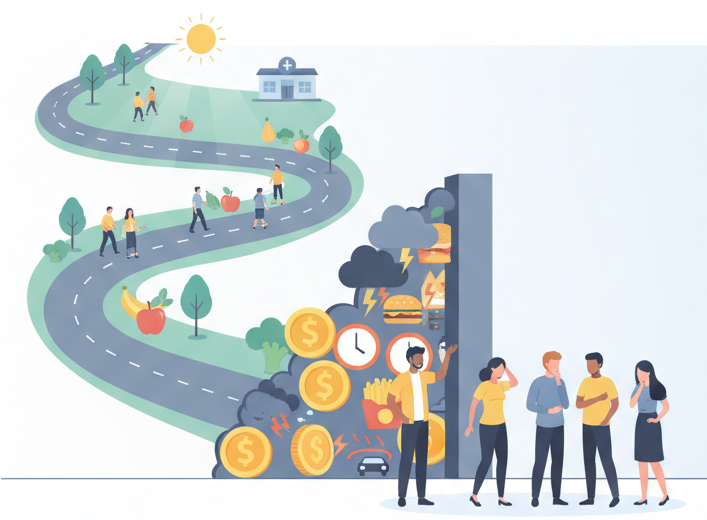
The diet quality is extremely dependent on the outside factors.
Chronic Conditions: The presence of such diseases as diabetes, heart disease, or COPD can make the selection of a diet more complicated.
Drugs: some drugs have an effect on the taste or appetite.
Social Factors: Older adults are vulnerable to highly processed and low-cost snacks rich in sugar and salt because depression, social isolation, and living on a fixed income may force them to consume this type of food.
Access: To persons who no longer drive or have problems cooking, merely getting fresh food into the home may be a challenge.
The dangers of not eating between meals (or not eating the right ones).
Disregarding the necessity to consume healthy snacks may cause a sequence of health problems.
1. The Potential of Malnourishment.
Older adults can experience accidental weight loss when they do not eat snacks, which contain no nutrient or eat them without paying attention to the content. It is not only a figure on the scale, but can be an indicator of muscle weakness, fatigue, and a compromised immune system and more infections and inability to heal wounds.
2. The Effect of Processed Food.
The opposite, however, is the case with a high-energy but low-nutrient diet (such as chips, confectioneries, and sweet beverages). The foods have the potential to lead to obesity, inadequate glucose regulation, hypertension, and unhealthy levels of blood lipids.
3. Health Impact in the Long-Term.
In the long-term, the lack of essential nutrients, in particular, protein, calcium, Vitamin D, and B12, may result in severe complications:
Sarcopenia: This is the loss of skeletal muscle mass caused by an early aging process. Similarly, osteoporosis is the loss of bone strength. In addition, anemia means the absence of healthy red blood cells.
Functional Decline: This is an overall decrease in functioning, in terms of quality of life.
Healthy Snacks among the Senior Citizens
In order to fight such risks, we must be deliberate with what comes on the plate. These are the main guidelines to choosing the most suitable healthy snacks among elderly people.
Prioritize Protein
Older adults tend to require more protein than the younger adults to keep body muscle. Most of the guidelines propose minimum of 1.0-1.2 grams of protein per kilograms of body weight per day.
Sources, Yogurt, milk, cheese, eggs, nuts, seeds, beans or fortified soy products.
Focus on Fiber and Vitamins
Fruits and vegetables are to be used as regular alternatives. They have the fiber needed to digest, potassium that is required to keep the heart healthy and various vitamins. Importantly, the whole foods are rich in these benefits, with no sodium and sugar additions that processed food items has.
Choose Whole Grains for Healthy Snacks for Senior Citizens
Whole grains are also satiating (full)- and weight-restricting.
Check: Whole-grain crackers, oatmeal and popcorn that have been made with a minimum amount of salt and fat.
Real-life Snack Ideas at All Times.
The thing is to know what to eat and to do it is another matter. The following are easy non-customized ways on how to make a more superior snack.
For Protein and Healthy Fats:
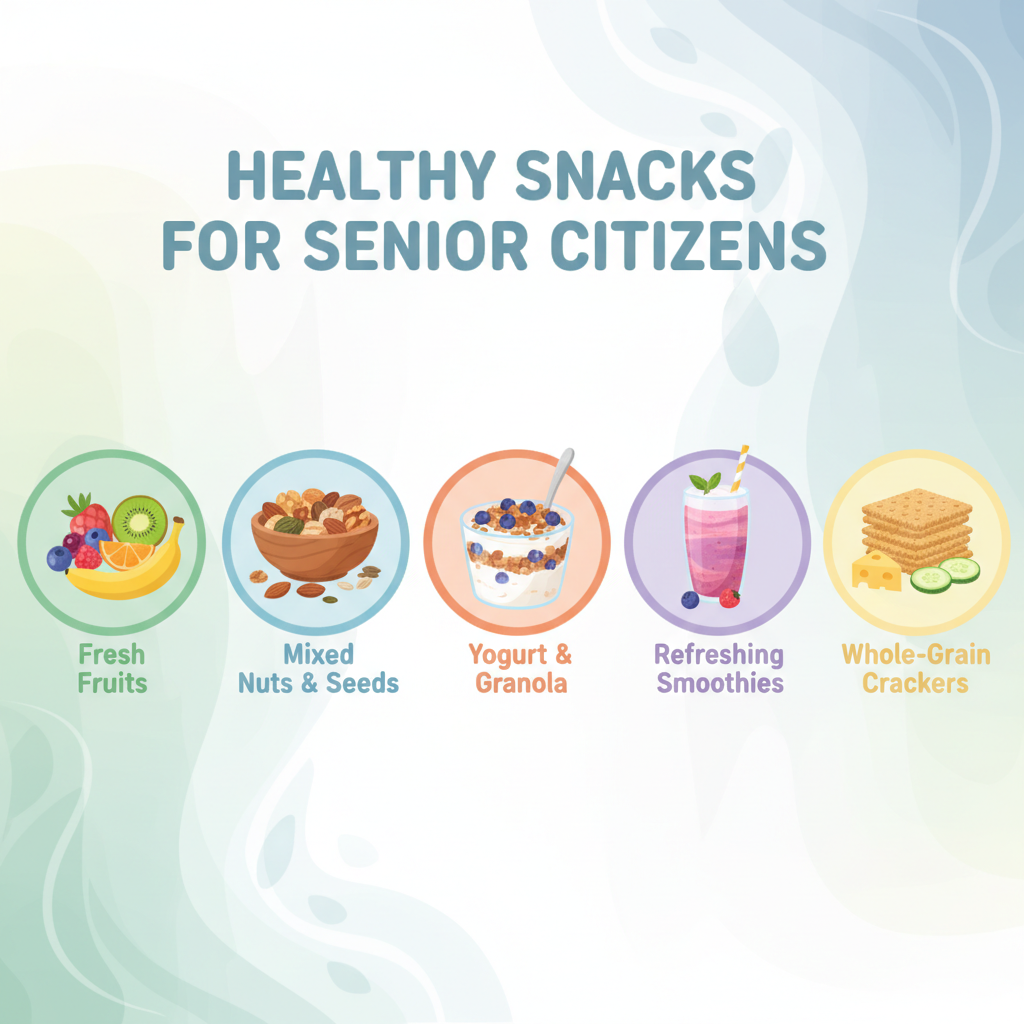
Cereals Light healthy snacks unsalted nuts, seeds or trail mix.
Fortified soy or dairy yogurt (read labels to make sure that they are and have been fortified with Vitamin D and Calcium).
In the instance of Easy Digestion and Vitamins:
Raw fruit or raw or cut vegetables with hummus, nut butter or a yogurt dip.
Remark: The texture should be changed depending on the ability to chew. For example, softer fruits or cooked vegetables are the most suitable options for people with dental problems.
For Energy and Comfort:
Toast or crackers made using whole-grain topped with cheese, a hard-boiled egg, or peanut butter.
Enhanced breakfast foods taken with milk in order to provide Vitamin B12, Calcium, Vitamin D.
Caregiver and Senior Care Management.
Nutrition is not something that may improve overnight. It demands a plan and in some cases, a bit of assistance.
Day Organization: Ideally, you desire 3 meals and one or three snacks each day. Moreover, distributing protein and energy uptake throughout the day does not mean having to eat excessively large meals, which can be challenging to digest by the elderly.
See Professionals: It is important to see physicians or dietitians regularly. They will be able to detect the risks of undernutrition at an earlier stage and tailor the recommendations to certain conditions, such as kidney disease or diabetes.
Consider Supplements: In the already undernourished, oral nutritional supplements may recommende to supplement energy and protein, although food should consume together.
Plan Ahead: It is hard to be spontaneous when one lives alone or has limited mobility. Meal and snack planning make sure that one can always access healthy choices.
Cultivating snacking as an inseparable component of the everyday health routine is one of the ways in which older adults will be able to keep their bodies strong, energy, and independent during the years to come.
Conclusion
Nutritious eating does not always mean a struggle, particularly to our elderly friends and relatives. We will be able to promote the well-being of the heart, normal blood sugar level, and general well-being by selecting snacks rich in nutrients, low in added sugar, and not extremely labor-intensive. You have 5 minutes before a medical appointment, need a warm-up after a hectic day, or a snack that will add extra fiber and protein, the following choices will make it clear that healthy snacking can be both good and convenient. Also, it is important to keep in mind the pairing of snacks and hydration, maintain the proportions controlled, and, above all, enjoy the tastes that make you feel good and confident about your daily nutrition.
Frequently Asked Questions
Q1. What is the number of snacks a senior should consume a day?
A1. Generally, the right number of snacks per day is 2 to 3 balanced snacks between meals; in fact, a senior with greater protein or calcium requirements should consume more of these balanced snacks. Additionally, adjust to activity, appetite, and medications.
Q2. What are the best nutrients that the seniors can look into for their snacks?
A2. For a balanced diet, include protein (meat, dairy products, beans), calcium or calcium-fortified plant milk, fiber (whole grains, fruits, vegetables), healthy fats (avocados, nuts, seeds), and vitamins D and B12.
Q3. Should one consume sugar snacks in case of diabetes?
A3. Use low-sugar alternatives such as unsweetened Greek yogurt, nuts or fruit with a slice of cheese.
Q4. Methods of having snacks that are easy to swallow and chew?
A4. It would be more appropriate if the diet consists of foods like smashed avocado sandwiches, smoothies, apple sauce, yogurt, hummus, or crackers. As for more hard products, one could either roast or soften them.
Q5. What tyoes of snacks I can eat with no preparation?
A5. For a healthy snack, consider Greek yoghurt with berries. Alternatively, try cottage cheese and sliced peaches, a banana with one tablespoon of peanut butter, or mixed nuts and dried fruits (be mindful of added sugars).
Q6. Are there snacks that may consume in order to promote bone health?
A6. Yes, diet with foods rich in calcium like fortified plant milk, low-fat yogurt, and calcium-fortified orange juice. Along with this, include your vitamin D source like fatty fish or fortified dairy.
Q7. What can seniors do to keep their body hydrated and their snack?
A7. Keep water-rich foods such as cucumbers, melons, and soups refrigerated and hydrate between bites by drinking water or fruit teas. Avoid drinks that contain caffeine and alcohol.
Q8. What are the storage rules to maintain the stainlessness and security of healthy snacks?
A8. To keep food fresh, store perishable products in the fridge. Additionally, store dry, healthy snacks in closed containers. For convenient portion control, use packaged nuts or dried fruit, which can be portioned, to prevent overeating.
Q9. What are the storage rules to maintain the stainlessness and security of snacks?
A9. To keep food fresh, store perishable products in the fridge. Additionally, store snacks that are dry in closed containers. For portion control, use packages of nuts or dried fruit, which can be eaten in portion amounts to prevent eating too much.
Q10. What can the elderly do to make snacks accessible to low mobility?
A10. Pre-opening snacks into small containers or using silicone molds is easy to handle. Think about finger-food such as cheese cubes (soft), pre-prepared vegetables or snacks that can be consumed sitting.
Disclaimer: Please note, this is not professional or educational information and, therefore, should not be applied in place of a professional diagnosis, nutritional plan, or therapy by a competent health practitioner.