
Understanding Cold Air Allergy Symptoms: Causes, Signs, and Effective Relief
Learn about the symptoms of cold-air allergy and their most frequent causes and ways to cope with them. This data is provided in the handbook format, including the causes, treatment, prevention suggestions and the answers to the frequently asked questions, which is accompanied by the assistance of the experts. Cold climate may cause some responses in the body, and may be confused with seasonal colds or sinus infections. However, cold-air allergies have tendencies. Unlike colds, wherein the person is usually accompanied by a sore throat and cough, cold-air allergies are normally accompanied by sneezing, itchy eyes and skin allergy, although not fever. Sinus infections are more likely to be chronic and often cause facial pain. In contrast, cold-air allergy can have different symptoms, which may require different solutions for other people. These will be briefly touched on in this guide: their prevention, causes, and treatment.
What Are Cold Air Allergy Symptoms?
Dry air, indoor heating, and sudden temperature changes are common in colder seasons. Consequently, such situations can cause allergic-type reactions in relatively large numbers of people. The effects include sneezing, sore eyes, congestion, and skin irritation.These signs are very different in nature compared to those of a cold, although they are similar to those of a cold. In this case, the guide will explain their difference and what causes them, as well as give some tips on how to relieve them quickly.
In order to avoid and relieve symptoms of cold-air allergy, one may want to consider the following tips, which are suggested by the specialists:
Install a humidifier in the house to keep the air from ever getting too dry.
Take a scarf and cover your nose and mouth outside to warm the air, and then you inhale it.
Make your house well-ventilated in order to cut off dust and other irritants.
Consume water in large amounts to keep oneself hydrated. This helps keep mucus liquid, decongest, and reduce skin irritation from dry air.
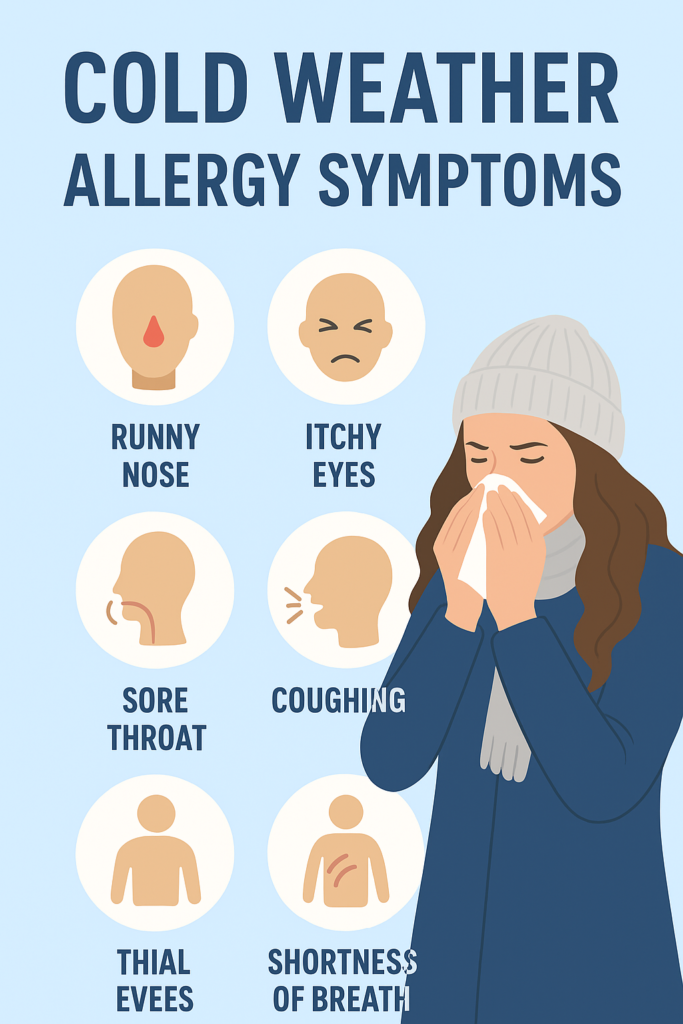
Common Cold Air Allergy Symptoms
The effects of cold air on your body are far too numerous. Therefore, knowing about the symptoms will make you act early. The most common cold air allergy symptoms are the following.
1. Sneezing and Runny Nose
Passages of the nose are provoked by cold air. The nose, accordingly, reacts to it by secreting more mucus. This leads to sneezing and a runny nose. Additionally, these signs are observed immediately after exposure to cool conditions and are similar to those of a viral cold. And they also pick up when you get back to warmer climates.
2. Nasal Congestion
The dry winter air makes the mucus in your nose thick. As a result, congestion occurs at a very high rate. This is more experienced by people who are sensitive to temperature changes. Loss of humidity also worsens nasal tissue swelling.
3. Red, Itchy, or Watery Eyes
The dry winter air makes the mucus in your nose thick. Consequently, congestion forms. This is more common among people who are sensitive to temperature changes. A reduction in humidity also worsens nasal tissue swelling.
4. Coughing and Throat Irritation
Breathing in the air of cold parchments makes the throat dry. Additionally, indoor heating lowers moisture levels. This drought brings about coughing and irritation. It is in the early mornings and late evenings, when temperatures are lowest, that people experience these symptoms.
5. Dry, Itchy Skin
In cold weather, skin dries out very quickly. Therefore, there follows dryness and itchiness. Patients with eczema experience numerous exacerbations. Winter allergens, including mold spores and pet dander, worsen the irritation.
6. Hives Triggered by Cold Exposure
Some are plagued with cold urticaria. This condition is red and swollen, with itching, and occurs as a result of exposure to cold. It appears within minutes. Furthermore, the symptoms worsen when the skin comes into contact with cold water or ice.
7. Headaches and Sinus Pressure
Cold air causes sinus tissue to swell. This causes pressure on the forehead, cheeks and eyes. These are the headaches that are worsened during dry winds.
Why Cold Air Allergy Symptoms Appear
To handle these issues, you must identify their causes so you can fully address them. There are several allergy flare-ups during winter.
- Dry Air and Low Humidity
Cold air holds less moisture. Therefore, your nose, throat and skin become very dry. Mucous membranes become dry and then extremely sensitive to allergens and irritants.
- Indoor Allergens Increase
During winter, people remain at home. The triggers found indoors include, however are not limited to:
Dust mites
Mold spores
Pet dander
Chemical fragrances
Due to closed windows, there is accumulation of allergens. This exposes people more, and exacerbates responses.
- Sudden Underheating and Overheating Shock the body.
Going from warm rooms into the cold outdoors triggers a reaction in your body. The sudden changes lead to inflammation, particularly in the airways and nasal passages.
- Immune Responses caused by cold.
These are those which are immunologically sensitive. Exposure of bodies to low temperatures triggers the release of histamine. This leads to symptoms of cold air allergy also being present, even though there is no real allergen.
- Weak Blood Flow to Skin
Blood vessels are dilated in low temperatures. Therefore, people with delicate skin are more prone to redness and other problems. Repeated exposure aggravates the response.
The Difference between Cold Air Allergy Symptoms and Cold or Flu.
However, they are similar but they are also different with respect to duration and cause.
- Onset and Duration
The symptoms of allergy manifest themselves rapidly.
Some symptoms of cold or flu take time to develop.
Cold air allergy symptoms persist as long as exposure continues.
- Fever and Body Aches
It is very uncommon to have fever due to allergies.
Body aches are common in the case of colds and flu.
- Mucus Color
Mucus is clear and is the result of allergies.
The infections leave yellow-green mucus.
- Itching
Skin and itchy eyes are also the characteristic of an allergy.
Itching is not often caused by the viral infections.
How to Diagnose the symptoms of Cold Air Allergy.
The correct diagnosis assists you in making the appropriate form of treatment.
- Clinical Evaluation
A physician examines your exposure history and symptoms. Specifically, brief and frequent responses of cold conditions indicate allergies to cold.
- Allergy Testing
Skin tests define the reactions towards indoor initiators such as dust mites and mold.
- Cold Stimulation Testing
In the case of cold urticaria, physicians use an ice cube on the skin. In case hives are formed, the diagnosis is made.
Best Remedies on Cold Air Allergy Symptoms.
Fortunately, there are a number of remedies that provide quick relief.
- Antihistamines
These are anti-histaminic drugs. Thus, they decrease sneezing, itching, and hives. Its use can be used on the day to day activities in peak winter months.
- Nasal Sprays
Naresaline sprays lubricate the nostrils. In the meantime, inflammation is decreased by corticosteroid sprays. Combine the two to achieve maximum results.
- Moisturizers
Luxurious lotions treat dry itchy skin. Use them after taking a shower to seep in the moisture. Also, select non-perfume formulas in order to prevent irritation.
- Humidifiers
The increase of moisture in the indoor air decreases the dryness. Consequently, this avoids coughing, irritation of the throat, and pains in the nose.
- Protective Clothing
Scarves, hats, and gloves hinder the contact with cold air. Reactions reduce when the skin remains hot.
- Warm Compresses
The sinus pressure is decreased by warm compresses. They also dilate nasal passages.
- Immunotherapy
In extreme instances, allergy drops or shots make one less sensitive over time.
Household treatments of the symptoms of cold air allergy.
The medical treatments are supplemented by natural methods.
- Hydration
Take warm water/ herbal tea. Healthy mucous membranes are covered with proper hydration.
- Steam Inhalation
Hot steam loosens mucus. It also calms down swollen nostrils.
- Honey and Ginger Tea
This tea relieves throats and cough. Ginger decreases inflammation, as well.
- Oatmeal Baths
Oatmeal relieves itchy skin. Warm water is to be used to prevent additional dryness.
5. Vitamin D
Winter sunlight is limited. Because of this, Vitamin D levels drop. Supplements support immune health.
Prevention Tips for Cold Air Allergy Symptoms
Simple lifestyle changes will reduce the symptoms.
Keep Indoor Air Clean
Clean the air in using purifiers. Clean filters regularly.
Limit Exposure to Cold Air
Those outside must cover their mouth and nose. This is what makes the air warm prior to your lungs.
Control Indoor Humidity
Keep the humidity at 4050%. This inhibits the growth of mold and decreases dryness.
Wash Bedding Frequently
Hot water kills dust mites. Linen after once a week in winter.
Avoid Strong Scents
Winter-sensitive sinuses are sensitive to perfumes and chemical cleaners.
Ventilate Your Home
Open the windows a few times to purify indoor air. Even a few minutes help.
When to See a Doctor
Seek medical attention if:
Symptoms persist over a period of longer than a week.
You get the swelling of the lips or eyes.
Inhalation becomes complicated.
Non-prescription medicine also fails.
Complications are avoided through early intervention.
Conclusion
The effects of cold air allergy are due to several factors. Indoor allergens are also important factors, as are cold air and a dry environment. These symptoms can, fortunately, be controlled through reasonable care. Moreover, this guide offers tips for relieving irritation and staying comfortable this season. Exercise, observe your skin, keep your nasal passages moist, and assess the air quality in your home. Therefore, these will ensure that one will not have to go through the cold all winter long.
Frequently Asked Questions (FAQs)
Do allergies really come as a result of cold air?
There are no allergens with cold air. Nevertheless, it causes responses in individuals who are susceptible to temperature fluctuations or indoor allergens.
- To what extent do the symptoms of cold air allergy last?
Their duration is determined by the exposure. Symptoms disappear after a warm up or after the improvement of indoor air quality.
- Are cold allergies life-threatening?
Most are mild. However, cold urticaria may develop severe in case of swelling. Consult the doctor in case this happens.
- Are there any children with symptoms of cold air allergy?
Yes. The skin and airways of children are usually sensitive and the children tend to respond intensely.
- Do humidifiers help?
Absolutely. Humidifiers replenish moisture, decrease coughs and alleviate nasal pain.
- Is cold urticaria permanent?
Not always. There are those who grow out of it in a few years.
- Are allergy to food aggravated in cold weather?
Cold temperatures do not directly cause food allergies. Nevertheless, weakened immunity can overreact.